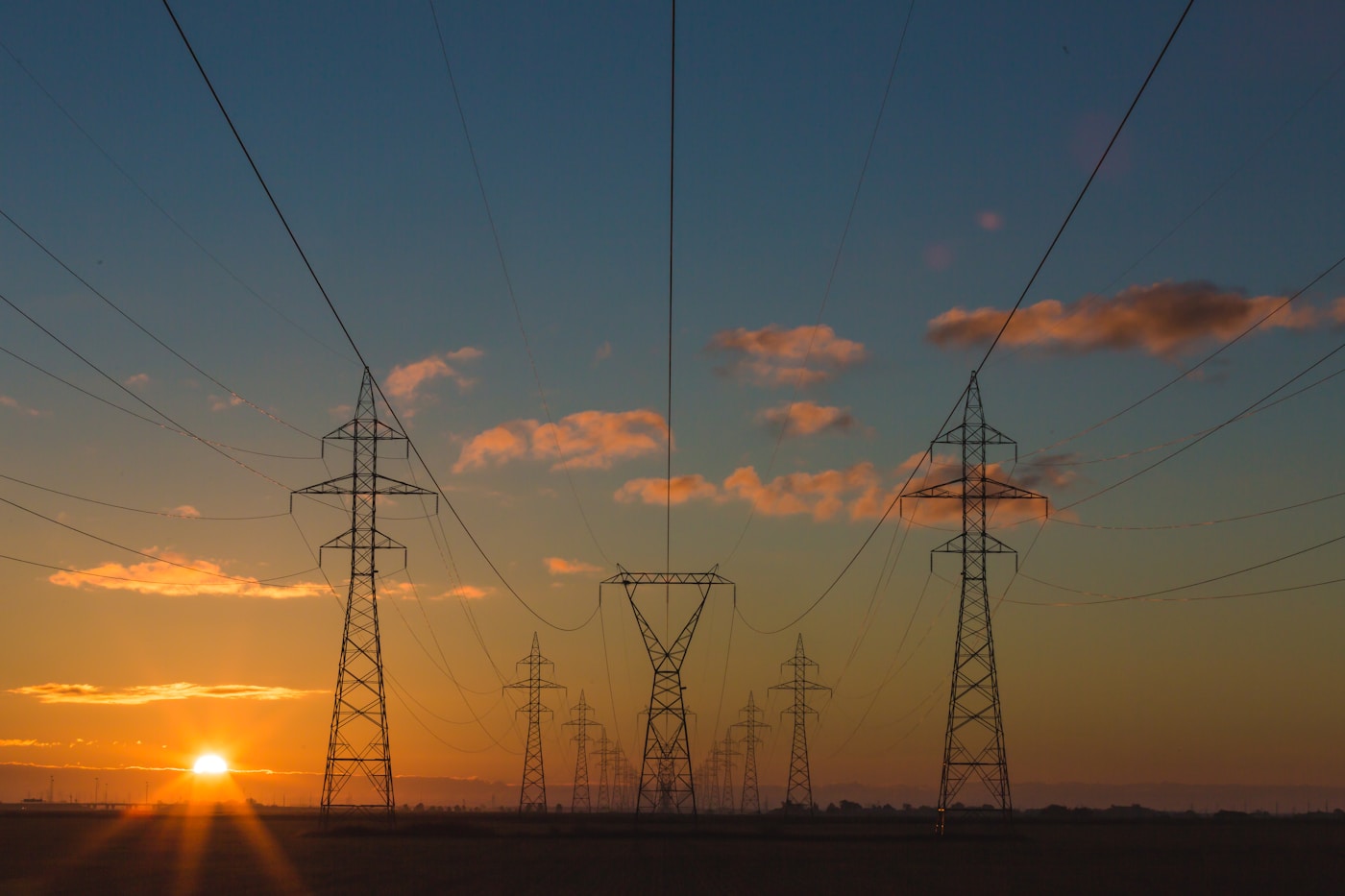
On a humid morning last July, grid operators at PJM Interconnection — the regional transmission organization that manages electricity flow across 13 states and Washington, D.C. — issued an emergency alert. Temperatures across the mid-Atlantic were pushing 100 degrees Fahrenheit, and demand was running 8 percent above their most pessimistic forecast. For several tense hours, operators dispatched emergency reserves and pleaded with large industrial users to curtail consumption. The grid held. But the margin was uncomfortably thin.
That episode was not an anomaly. It was a preview.
Across the United States, the electric grid is being asked to do something it was never engineered to do: absorb an unprecedented simultaneous surge in electricity demand while absorbing an equally unprecedented surge in new generation — most of it intermittent renewable power that requires transmission infrastructure that simply does not yet exist. The result is a system under pressure from every direction at once.
The Interconnection Queue Crisis
The most visible symptom of the grid's strain is the Federal Energy Regulatory Commission's interconnection queue — the backlog of power plants waiting for permission to connect to the transmission network. As of early 2025, that queue holds more than 2,700 gigawatts of proposed capacity. For context, the entire installed generating capacity of the United States is approximately 1,200 GW. The queue, in other words, contains more than twice as much generation as currently exists on the entire national grid.
Key Metric
2,700+ GW
Proposed generation capacity currently waiting in the FERC interconnection queue — more than twice the entire installed U.S. fleet. Average wait time: 5 years.
Most of that proposed capacity will never be built. Developers routinely file speculative applications, clogging the queue with projects that lack financing, land, or realistic timelines. But even after accounting for the inevitable attrition, the volume of serious projects seeking interconnection approval far exceeds the capacity of the system to process them. The average project now waits more than five years for a final interconnection study. By the time approval arrives — if it does — interest rates may have shifted, contracts may have lapsed, and the original economic rationale may have evaporated.
FERC attempted to address the backlog with Order 2023, a sweeping interconnection reform rule finalized in mid-2023 that replaced the traditional "first-come, first-served" serial study process with a cluster-based approach, processing groups of projects simultaneously. The rule was widely praised by developers and grid experts, but its implementation has been slow, and the underlying problem — too little transmission capacity relative to the demand for it — cannot be solved by procedural reform alone.
The Demand Shock Nobody Predicted
For most of the past decade, U.S. electricity demand was essentially flat. Efficiency gains in buildings, appliances, and industrial processes largely offset population and economic growth, giving grid planners a relatively stable baseline to work from. That stability is now gone.
The primary driver is artificial intelligence infrastructure. A modern hyperscale data center — the kind being built by Amazon Web Services, Microsoft Azure, and Google Cloud at dozens of locations across Virginia, Texas, Georgia, and Ohio — can consume 100 to 500 megawatts of electricity continuously. These facilities operate 24 hours a day, seven days a week, with no seasonal variation and virtually no ability to curtail load during peak periods. They are, in the language of grid operators, "must-serve" load.
In Northern Virginia alone — the world's densest concentration of data center infrastructure — electricity demand is projected to more than double by 2030, according to Dominion Energy's most recent integrated resource plan. The utility has filed requests for more than $10 billion in new transmission and generation investment to serve that demand. Similar dynamics are playing out in Dallas, Columbus, and Atlanta.
Layered on top of data center growth is the accelerating electrification of transportation. The U.S. electric vehicle fleet is expected to exceed 20 million units by 2030, with charging patterns — particularly the evening demand spike as commuters plug in after work — adding new stress to distribution networks that were designed around residential loads measured in kilowatts, not the tens of kilowatts that a Level 2 charger draws.
Transmission: The Long Pole in the Tent
New generation can be built in 18 to 36 months. New transmission infrastructure typically takes 10 to 15 years, largely due to permitting requirements, right-of-way acquisition across multiple jurisdictions, and the complexity of coordinating upgrades across the interconnected network. This asymmetry has become the defining constraint of the energy transition.
The Midcontinent Independent System Operator, which manages the grid across 15 states in the central United States, approved its first tranche of long-range transmission projects in 2022 — a $10.3 billion package of high-voltage lines designed to connect wind resources in the Great Plains to load centers in the Midwest. Those projects are now in various stages of permitting and construction. Several are not expected to be in service until 2030 or later.
The Inflation Reduction Act of 2022 allocated $2.5 billion for grid resilience grants through the Department of Energy and created a new loan authority for transmission projects, but the federal government's ability to directly fund and permit interstate transmission remains limited compared to other developed countries. The United States lacks a national transmission planning authority with meaningful siting power.
"We are adding renewable generation at a pace that the transmission system cannot accommodate. Until that changes, we are building solar and wind farms that will be curtailed rather than dispatched." — Senior grid engineer, Midcontinent Independent System Operator
Reliability on the Edge
The North American Electric Reliability Corporation, the nonprofit organization that sets and enforces reliability standards for the bulk power system, has issued increasingly stark warnings in its annual assessments. In its most recent Long-Term Reliability Assessment, NERC identified a large portion of the central and eastern United States as facing "elevated risk" of energy shortfalls during periods of extreme demand — meaning that under certain conditions, the grid would lack sufficient reserves to maintain reliable service.
The concern is not that the lights will go out on a normal Tuesday in March. It is that the margin of safety — the buffer of surplus capacity that allows the system to absorb unexpected outages of generation or transmission — has been eroding. Older coal and nuclear plants that once provided reliable baseload power are retiring faster than replacement capacity can be permitted, built, and connected. The capacity gap is being filled, unevenly, by a combination of natural gas peakers, battery storage, and demand response programs.
Utilities and grid operators are responding with capital investment at a scale not seen since the postwar era of rural electrification. NextEra Energy, the nation's largest renewable developer, has outlined more than $100 billion in investment plans through 2027. Duke Energy and Dominion are each seeking regulatory approval for multi-billion dollar transmission upgrades. The capital is there. What remains uncertain is whether the permitting and regulatory systems can process it fast enough.
The test ahead is not purely technical. It is institutional. The grid was built over a century through a patchwork of local utilities, state regulators, and federal oversight — a system optimized for stability in a world of predictable, centralized power generation. The energy transition demands something different: a grid that is faster, more flexible, more distributed, and far more interconnected. Building that grid, within the constraints of existing law and institutions, may be the most consequential infrastructure challenge the United States has faced in a generation.