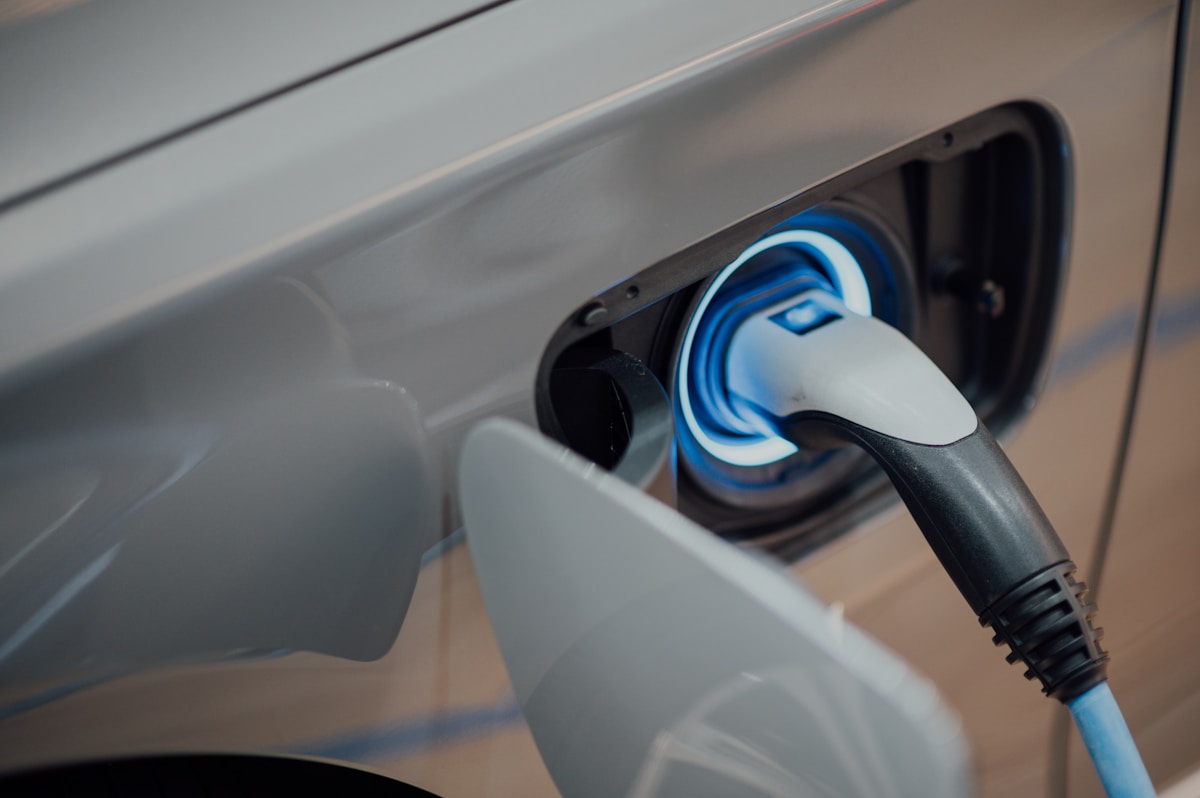
Consider two facts about American EV adoption, held simultaneously. First: the U.S. electric vehicle fleet is expected to exceed 20 million units by 2030, growing faster than any optimistic forecast from five years ago. Second: approximately 80% of all EV charging in America happens at home — and 31% of all U.S. households live in multifamily buildings where on-site EV charging is available at roughly 5% of properties. The arithmetic of those two facts is the core of America's EV infrastructure problem.
The EV transition is not a technology problem. The cars are better, cheaper, and more capable than they have ever been. Range anxiety, once a legitimate concern for early adopters, has largely been resolved by the combination of improved battery density and Tesla's decision to open its Supercharger network to other manufacturers. The problem is physical infrastructure — the electrons, the cables, the panels, the transformers, and the grid capacity that have to exist before those electrons can reach the vehicles that need them. And that infrastructure is not keeping pace.
The Apartment Problem
The most structurally difficult EV charging challenge in the United States is not the rural highway desert, though that is a genuine problem. It is the urban and suburban apartment building. A single-family homeowner who buys an EV can, in most cases, install a Level 2 charger in their garage for $1,500 to $3,000, charge overnight at off-peak rates, and never need to interact with the public charging network for daily use. This is the dominant EV ownership experience in America, and it is why the transition has proceeded as smoothly as it has.
For a resident of a multifamily building — an apartment, condo, or townhome — that option typically does not exist. Installing EV charging in a multifamily building requires electrical panel upgrades that can cost anywhere from $1,500 to more than $40,000 per charger, depending on the building's existing electrical infrastructure. It requires coordination among building owners, tenants, HOAs, and utility companies. It requires property owners to enter a business — operating EV charging equipment — that they did not sign up for and have no experience with. And it requires solving problems of equity, billing, and access that are non-trivial in buildings where parking is shared.
The Apartment Charging Gap
31%
Share of U.S. housing that is multifamily, where on-site EV charging is available in only ~5% of properties. This is the hardest infrastructure problem in the EV transition — and the least addressed by current policy.
The Rural Desert
Outside metropolitan areas, a different kind of infrastructure gap persists. As of 2025, 76.5% of metropolitan counties had at least one DC fast-charging station within their boundaries. Only 45% of rural counties could say the same. In states like North Dakota, South Dakota, and Arkansas, the density of fast-charging infrastructure falls so far below what would be needed to reliably complete an interstate drive in an EV that range anxiety — supposedly solved — remains a genuine deterrent to purchase in rural communities.
The federal government's primary policy response to this gap has been the National Electric Vehicle Infrastructure program, funded at $5 billion under the Infrastructure Investment and Jobs Act of 2021. The NEVI program allocates funds to states to build DC fast-charging stations along designated Alternative Fuel Corridors — primarily interstate highway routes. As of late 2025, NEVI had resulted in approximately 384 charging ports. That is not a typo. After several years and hundreds of millions of dollars, the program has produced hundreds of ports rather than the tens of thousands the initial projections implied.
The delays reflect a bureaucratic process that required states to develop plans, seek approvals, procure contractors, navigate environmental review, and coordinate utility upgrades before a single charger could be installed. Updated DOT guidance released in August 2025 attempted to address some of these bottlenecks, allowing states to resubmit plans with greater flexibility and permitting installations beyond the original corridor focus. Whether the adjustment comes in time to meaningfully close the gap before the decade's projected EV adoption curve steepens is uncertain.
"We've been funding EV chargers with highway-funding timelines when we needed to be moving at software-deployment timelines. The gap between political commitment and physical infrastructure is real, and it risks becoming a constraint on adoption that will be blamed on the technology rather than on procurement bureaucracy." — Transportation electrification researcher, Rocky Mountain Institute
The Grid Underneath
Beneath the charging infrastructure challenge lies a deeper grid readiness problem. Distribution networks — the local power lines and transformers that carry electricity from the substation to individual homes and buildings — were designed around residential loads measured in kilowatts. A Level 2 home charger draws 7 to 11 kilowatts. A DC fast charger draws 50 to 350 kilowatts. When a neighborhood experiences rapid EV adoption, the downstream transformers and feeders that serve it can reach saturation faster than utilities can upgrade them.
Utility load forecasting departments, which spent decades in an era of flat demand growth, are being asked to model adoption curves that are highly uncertain, geographically concentrated, and time-sensitive in ways that traditional long-range planning does not handle well. The consequences of underbuilding distribution capacity are not abstract: neighborhoods where EV adoption outpaces grid upgrades will face slow charging, degraded power quality, and potentially localized reliability problems during peak demand periods.
The good news is that the physics of EV charging — flexible in timing, predictable in total energy need — actually make it a natural candidate for smart grid management. A fleet of EVs that can charge at any point during an eight-hour overnight window is a demand management resource, not just a load problem, if utilities invest in the software and time-of-use rate structures to manage it. Some utilities are doing this well. Many are not. The gap between the leading edge of EV deployment and the median state of utility readiness is one of the less-discussed risks in the EV transition story — one that is unlikely to resolve itself without sustained regulatory pressure and capital investment at a scale that, frankly, has not yet materialized.