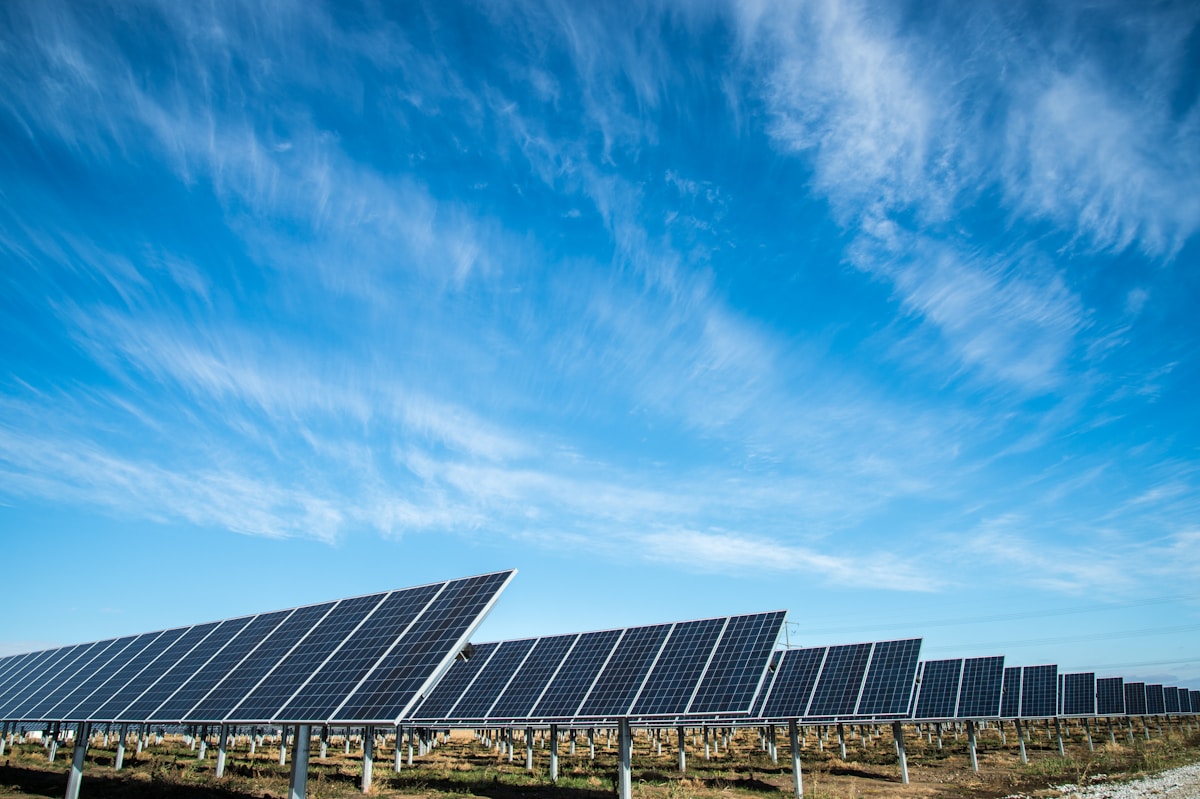
On a clear January afternoon in Miami, solar panels produce more electricity per square foot than those in Los Angeles. The physics are not subtle: Florida averages 5.67 peak sun hours per day, with a Global Horizontal Irradiance of 4.88 kilowatt-hours per square meter daily — among the highest readings in the eastern United States. By the measure that matters most to solar economics, Florida should be one of the great solar states in the country. It is not, at least not yet. And the reason has almost nothing to do with sunlight.
The gap between Florida's solar potential and its solar reality is one of the most instructive stories in American energy policy. It is a story about utility economics, regulatory capture, and the extraordinary power that investor-owned utilities have to shape the policy environment in which they operate. It is also, increasingly, a story about change — because the arithmetic is finally becoming too compelling to ignore.
The Veto That Saved Rooftop Solar
In 2022, the Florida legislature passed HB 741, a bill that would have restructured the state's net metering program — the policy that credits rooftop solar owners for electricity they send back to the grid — over a three-year glide path. Under HB 741, the credit rate would have dropped from 100% of retail value to 75% in 2024, then 60% in 2026, and 50% in 2027. Industry surveys conducted at the time found that 93% of homeowners interested in going solar said they would not consider it if the bill passed.
Governor Ron DeSantis vetoed the bill. His stated reason was inflation. But the more significant fact is why the bill existed at all: investigative reporting revealed that the legislation had been substantially drafted with assistance from NextEra Energy, the parent company of Florida Power & Light, the state's largest electric utility. HB 741 was, in the bluntest terms, an incumbent utility writing the rules of competition in its own favor and finding legislative sponsors to introduce them.
The veto preserved net metering in Florida at full retail rates — for now. It did not resolve the underlying tension between the state's dominant utilities and the distributed energy resources they view as competitive threats to their regulated revenue model.
Florida's Untapped Potential
2%
Share of Florida's technically achievable rooftop solar capacity currently installed. The state receives 5.67 peak sun hours per day — more than Los Angeles — yet lags far behind California, Texas, and even Arizona.
Utility-Scale Dominance
One number tells the story of how Florida's solar expansion has been shaped: approximately 80% of the state's solar generation comes from utility-scale installations of one megawatt or larger — the kind built and owned by FPL and Duke Energy Florida rather than by homeowners and small businesses. This is not a coincidence. It reflects a deliberate strategic preference by the state's dominant utilities, which have enthusiastically embraced utility-scale solar as a cost-efficient replacement for aging natural gas capacity while working persistently to limit the growth of rooftop solar that would compete with their centralized generation model.
FPL's most recent resource plan calls for 17,433 MW of incremental solar capacity by 2035 — a genuinely impressive buildout. In 2024 alone, FPL added 2,250 MW of utility-scale solar and reported that the generation saved customers $218 million in fuel costs. Duke Energy Florida's base rate filing includes 14 new solar sites adding 1,050 MW. The utilities are, by any reasonable measure, committed to solar. They simply prefer their own kind.
From a pure system perspective, utility-scale solar is more efficient than rooftop in several ways: lower installed cost per watt, better siting for grid interconnection, and economies of scale in operation. The legitimate debate is not whether utility-scale solar is good — it is — but whether the suppression of distributed rooftop solar is good policy for Florida residents, particularly those in communities where utility service has historically been unreliable during hurricanes and extreme weather events.
The Resilience Case for Rooftop
Hurricanes Irma, Ian, and Idalia each reminded Florida residents of a feature of centralized power generation that utility resource plans rarely highlight: when the grid goes down, it takes everyone with it, regardless of how many gigawatts of clean generation are connected to it. A rooftop solar system paired with battery storage is, in principle, the only electricity infrastructure that can keep a home running when the transmission lines are on the ground.
This is not an argument against utility-scale solar. It is an argument that Florida's residential solar policy deserves to be evaluated on resilience grounds as well as economic ones, and that a policy framework designed by utilities to limit rooftop competition is not serving the full range of public interests.
The good news is that residential solar in Florida is growing faster than at any point in the state's history. After leasing restrictions were loosened, small-scale solar installations grew by 1,106% between 2019 and 2024. Net metering customers doubled from roughly 88,000 in June 2021 to more than 182,000 by June 2023. The economic case — particularly when paired with battery storage for hurricane resilience and time-of-use rate optimization — is becoming increasingly difficult to dismiss, even for homeowners who have historically assumed that solar economics favor sunnier states.
"Florida has no solar problem. It has a policy problem. The resource is extraordinary. What we lack is a regulatory framework that allows the full value of that resource to accrue to residents rather than to regulated utilities." — Energy policy researcher, University of Florida Energy Institute
Our View: Solar Is Florida's Best Energy Bet
We will be direct about where we stand: we believe that solar, when properly designed, financed, and installed, is the single best energy investment most Florida homeowners and businesses can make. The combination of exceptional solar irradiance, rising utility rates, increasingly affordable battery storage, and documented hurricane vulnerability of centralized grid infrastructure creates a case that is difficult to rebut on purely economic and practical grounds.
That does not mean every solar installation is well-done, or that every contractor is trustworthy, or that the economics work identically in every situation. It means that the systemic case for distributed solar in Florida is strong, and that policies which suppress it — whether through net metering rollbacks, interconnection delays, or favorable rate treatment for utility-owned generation — are not serving residents well.
Florida added 3,000 MW of utility-scale solar in 2024, second only to Texas. The state's total installed capacity is expected to nearly double to 30,000 MW by 2030. That is a remarkable trajectory. The question is whether the residential and commercial sectors will be permitted to participate in it fully, or whether the Sunshine State will continue to be one of the few places in America where some of the best solar economics in the country remain systematically underutilized. The answer is largely a political choice.