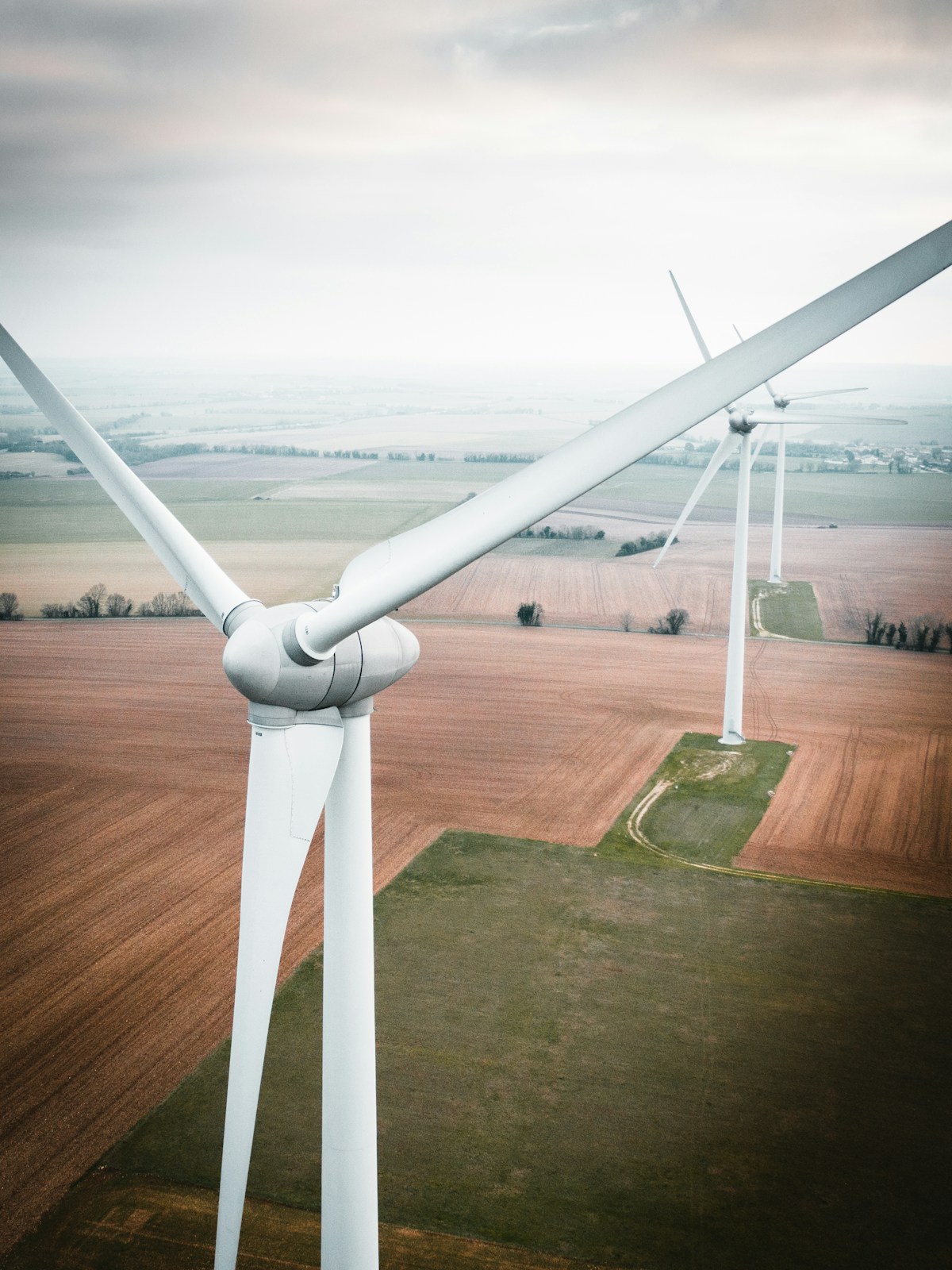
In late 2023, Ørsted — the Danish energy company that had, more than any other developer, built the narrative of American offshore wind as an imminent industrial revolution — announced it was canceling Ocean Wind 1 and Ocean Wind 2, two New Jersey projects totaling 2,400 megawatts of capacity. The write-down was approximately $4 billion. It was the largest single loss in the company's history, and it was a signal that the American offshore wind industry had entered a crisis that had been building for two years but had not been publicly acknowledged until it was impossible to ignore.
Ørsted was not alone. Avangrid walked away from Commonwealth Wind and Park City Wind in New England, paying $48 million in contract termination penalties. BP and Equinor terminated their contract for Empire Wind 2 in New York, recording combined write-downs of more than $800 million. By the end of 2023, more than 12 gigawatts of planned U.S. offshore wind capacity had been canceled — roughly half the announced pipeline at the time. The industry's boosters had described offshore wind as the clean energy technology that would transform the Northeast. Instead, it became the clean energy story that transformed, almost overnight, from an inevitable success to a case study in industrial policy failure.
Why the Projects Died
The cancellations were not, fundamentally, a story about politics or ideology, though political opposition from fishing communities, coastal tourism interests, and former President Trump's vocal hostility to offshore wind provided convenient narratives. They were a story about economics — specifically, about what happened when the cost assumptions that underpinned offshore wind contracts, signed in a low-interest-rate environment in 2018 to 2021, collided with the inflation, supply chain disruption, and interest rate increases of 2022 to 2024.
Offshore wind turbines are large, expensive, and difficult to manufacture and install. The industry's cost projections assumed a learning curve — that as more projects were built, costs would fall, as they had for onshore wind and solar. In the United States, that learning curve ran directly into a supply chain with no existing domestic capacity to supply the turbines, towers, foundations, cables, and installation vessels that offshore wind requires. Siemens Gamesa, the dominant turbine manufacturer for U.S. offshore projects, reported anticipated losses of $2.2 billion in 2024 related to offshore wind contracts signed at prices that turned out to be uneconomic.
Canceled U.S. Offshore Capacity
12+ GW
U.S. offshore wind capacity canceled between 2022 and 2024 — roughly half the announced project pipeline — as inflation, rising interest rates, supply chain problems, and vessel constraints made existing contracts unfinanceable.
The Jones Act Problem Nobody Fixed
One supply chain constraint deserves specific attention because it is a policy problem rather than a market problem: the Jones Act, the century-old maritime law requiring that cargo moved between U.S. ports be carried on U.S.-built, U.S.-owned, and U.S.-crewed vessels. For offshore wind, the Jones Act effectively prohibits the use of the specialized turbine installation vessels that exist in European fleets — vessels purpose-built for lifting 15-megawatt turbines onto offshore foundations.
No Jones Act-compliant installation vessel existed when the offshore wind buildout began. One — Dominion Energy's Charybdis — was eventually ordered, at a cost that escalated from approximately $500 million to more than $625 million, with delivery delays pushing commissioning into late 2024. The American Bureau of Shipping estimated that meeting the Biden administration's 30 GW by 2030 offshore wind target would require more than 110 U.S.-flagged vessels that do not currently exist. The Department of Energy's own analysis suggested that roughly 50% of planned offshore projects would be delayed beyond 2030 without a dramatic expansion of domestic offshore vessel capacity.
"Offshore wind is not failing because the resource is bad. The wind blows beautifully off the Northeast coast. It's failing because we built an industrial policy on top of a maritime policy that was designed in 1920 and has never been seriously reformed." — Senior fellow, Resources for the Future
What Is Actually Getting Built
The cancellations dominate the narrative, but they are not the entire story. In January 2024, Vineyard Wind 1 — an 806-megawatt project off the coast of Massachusetts — began delivering power to the New England grid, eventually reaching full commercial operation. South Fork Wind, a smaller project off Long Island, achieved full power in March 2024. Together, they demonstrated that U.S. offshore wind can work. The Northeast coast's wind resource is genuine, the technology is proven, and the grid connections are viable.
New York awarded 1,734 megawatts of new offshore wind contracts in 2024 under a revised procurement model designed to account for the post-inflation cost environment. Massachusetts continues to advance solicitations for additional capacity. The multi-state coordinated procurement approach — where several New England states align their timelines and contract terms to give developers sufficient certainty to commit — is emerging as a more durable model than the single-state approach that characterized the first wave of contracts.
The question is not whether U.S. offshore wind will exist. It will. The question is whether it will deliver the scale that the clean energy transition requires on any timeline relevant to climate goals — and whether the lessons of the past three years will actually change how the next generation of projects is contracted, permitted, and supplied. The answers depend on decisions being made right now in state utility commissions, federal shipping policy, and the investment departments of the handful of developers with both the capital and the appetite to try again. On current evidence, the cautious optimism is warranted. The exuberant optimism of 2021 was not.